

Sanden Europe at SCHUFA Congress
~ ESG Data as Key to Strategic Transformation ~
16 July 2025 in News
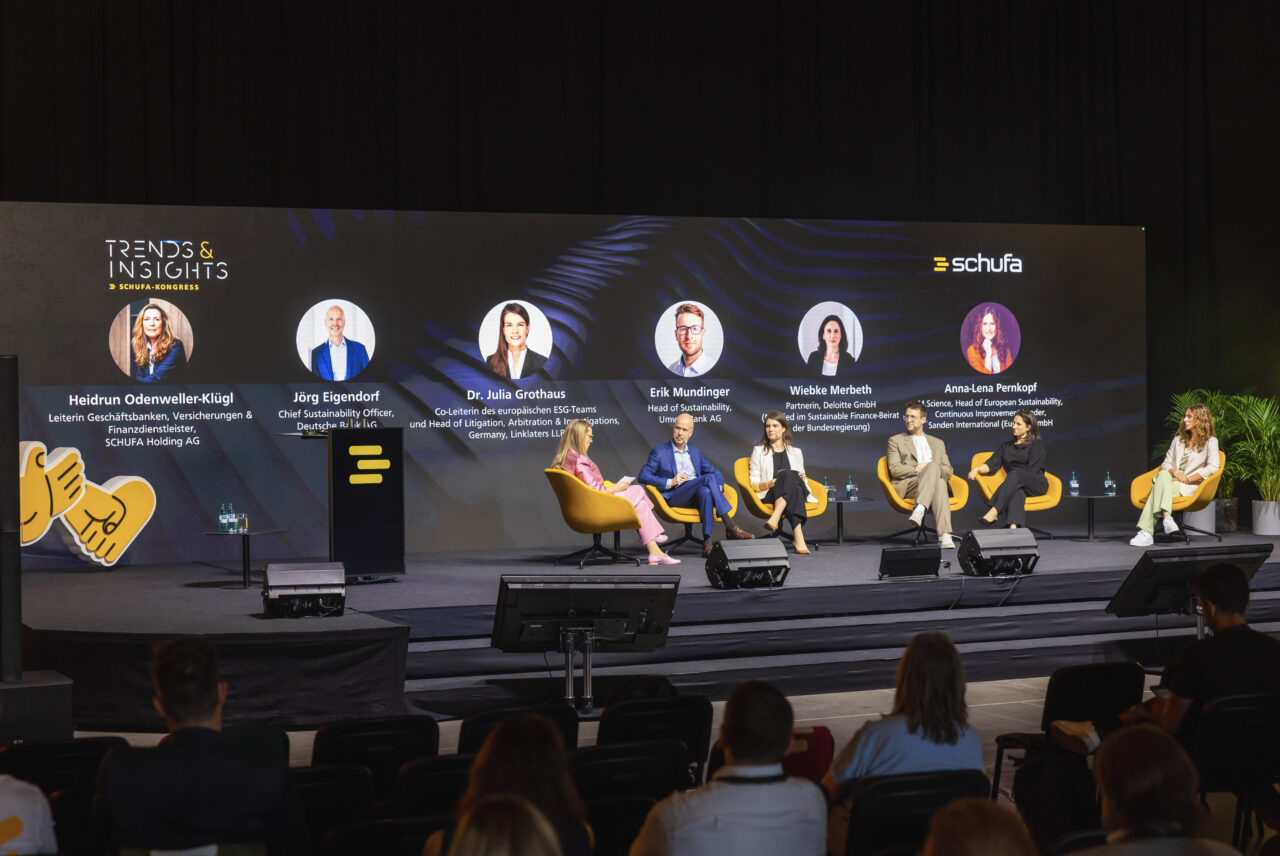
At the recent SCHUFA Congress on May 14th and 15th, 2025, our colleague Anna-Lena Pernkopf, Head of
European Sustainability at Sanden International (Europe) GmbH, the European subsidiary of Sanden
Corporation (Head Office: Isesaki City, Gunma Prefecture, Japan), was invited to join the expert panel
discussion “#ESG Sustainable Finance – Wie Banken und Unternehmen die Regulatorik erleben.”
”The event brought together high-level representatives from finance, industry, and regulation to explore how
standardized ESG data can help manage sustainability risks and unlock opportunities for transformation.


Anna-Lena Pernkopf (SIE)
A Real-Economy Perspective from Manufacturing
The SCHUFA (Schutzgemeinschaft für allgemeine Kreditsicherung) is Germany’s leading credit rating agency, traditionally known for assessing creditworthiness. With an increasing focus on sustainability data, SCHUFA is now positioning itself as a key player at the intersection of finance and ESG regulation.
Anna-Lena contributed the important perspective of the manufacturing sector, sharing insights into thechallenges of implementing ESG regulations like the CSRD within a global corporate structure. She
emphasized the coordinating role of Sanden Europe in driving ESG progress across the wider group — especially when navigating diverse regulatory environments.
The panel was expertly moderated by Heidrun Odenweller Klügl and included the following distinguished experts:
- Jörg Eigendorf (Chief Sustainability Officer, Deutsche Bank AG)
- Dr. Julia Grothaus (Co-Head, European ESG Team & Head of Litigation,Arbitration and Investigations, Linklaters LLP)
- Erik Mundinger (Head of Sustainability, UmweltBank AG)
- Wiebke Merbeth (Partner, Deloitte GmbH / Former Member,German Government’s Sustainable Finance Advisory Council)
Key Takeaways for the ESG Journey
There was strong agreement that structured, reliable ESG data is essential for transparency and
comparability. A shared conclusion emerged:ESG data collection works best when financial and real economy actors collaborate to establish efficient, standardized models.
This enables companies to shift their focus from administrative data gathering to what really matters: driving the transition forward and managing ESG-related risks effectively.
Ultimately, this approach turns regulatory complexity into a strategic opportunity for transformation.
What It Means for Sanden
Anna-Lena’s contribution ensured that the voice of the real economy—and specifically the manufacturing sector—was actively represented.
By highlighting Sanden’s proactive role in coordinating ESG across international structures, she
strengthened our position in the ongoing ESG dialogue.
Her participation reflects Sanden’s commitment to shaping a more sustainable and resilient future—not only by complying with regulations, but by helping define how they are applied in practice.
Reference Links
- Sanden International (Europe) GmbH https://www.sanden-europe.com/
- SCHUFA(Schutzgemeinschaft für allgemeine Kreditsicherung https://www.schufa.de/